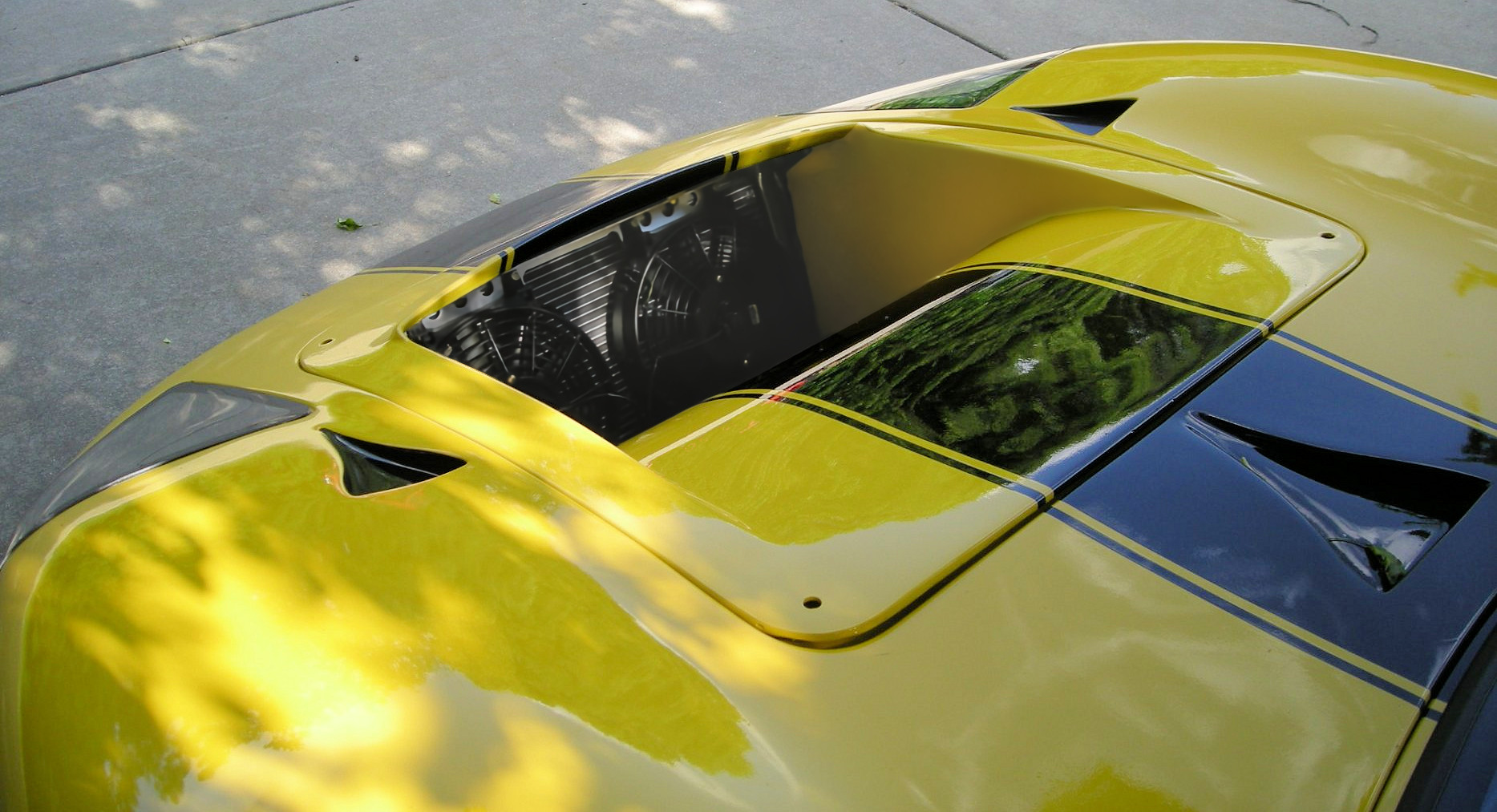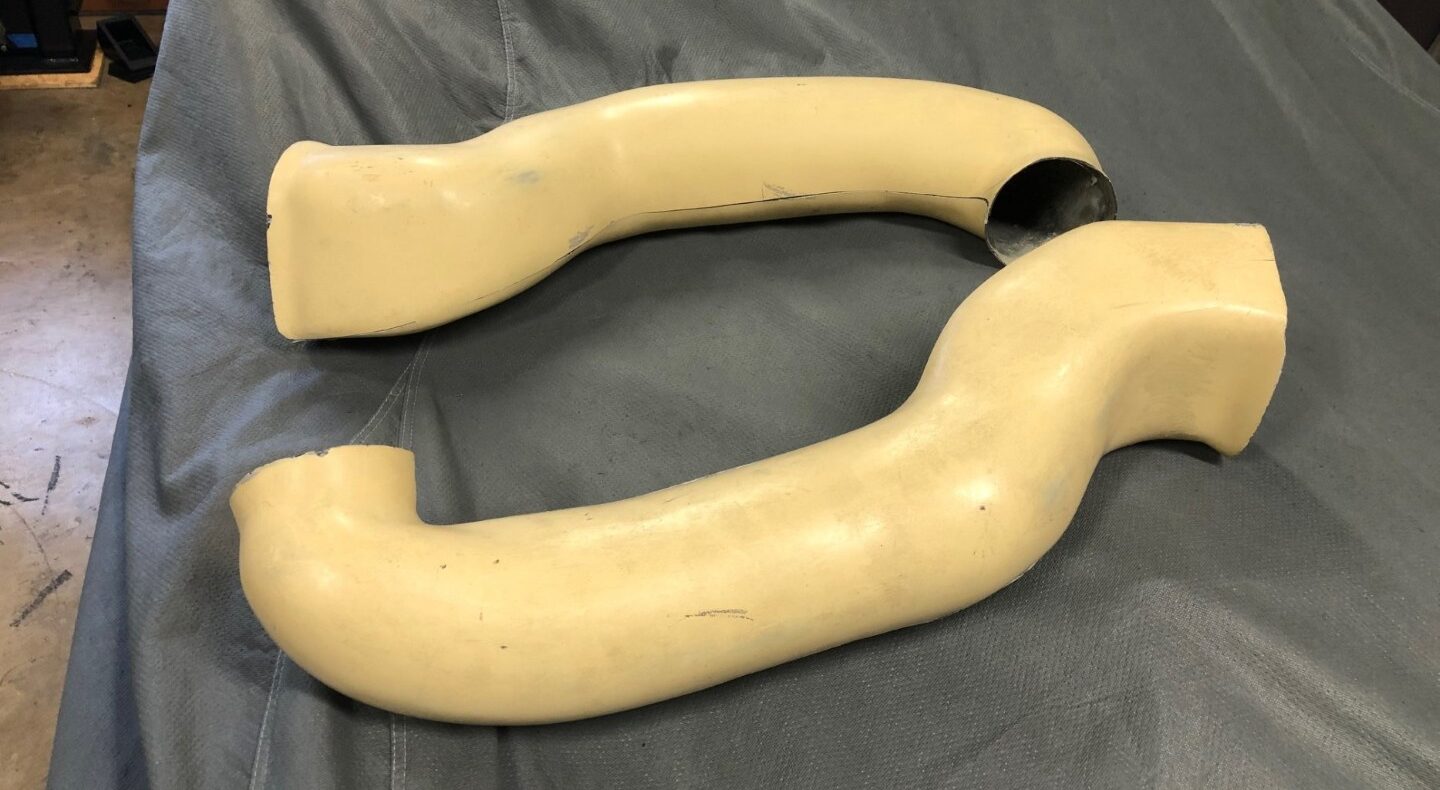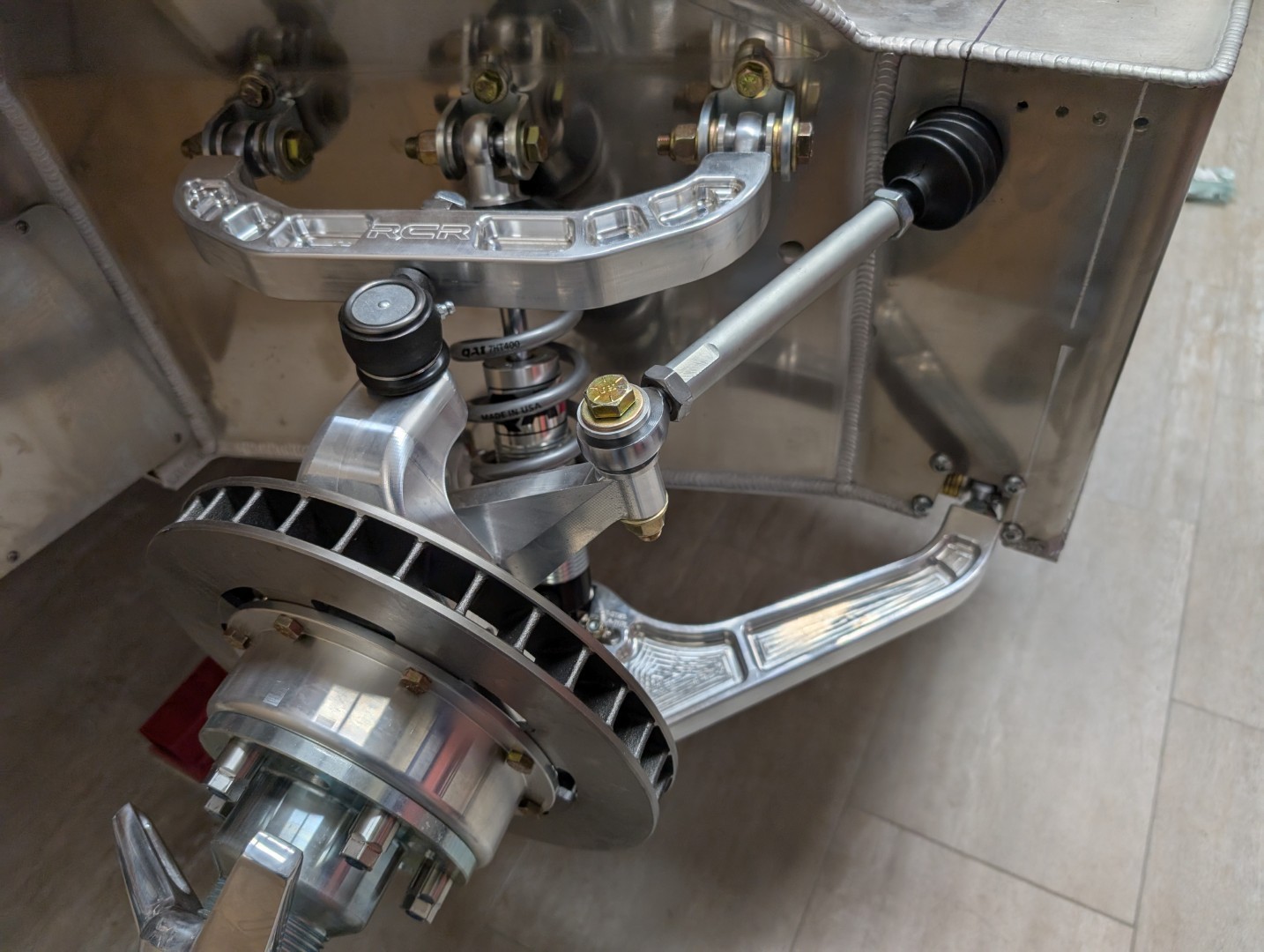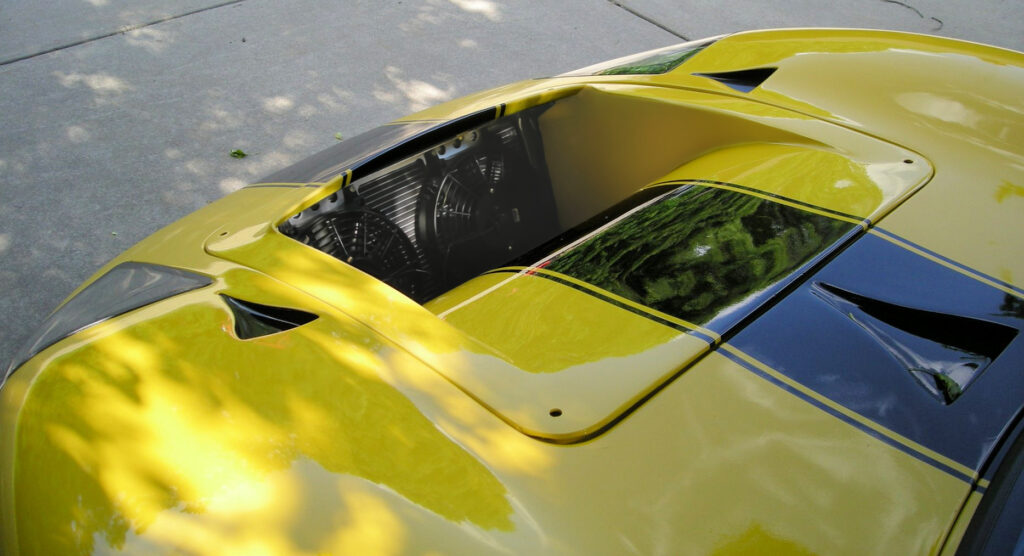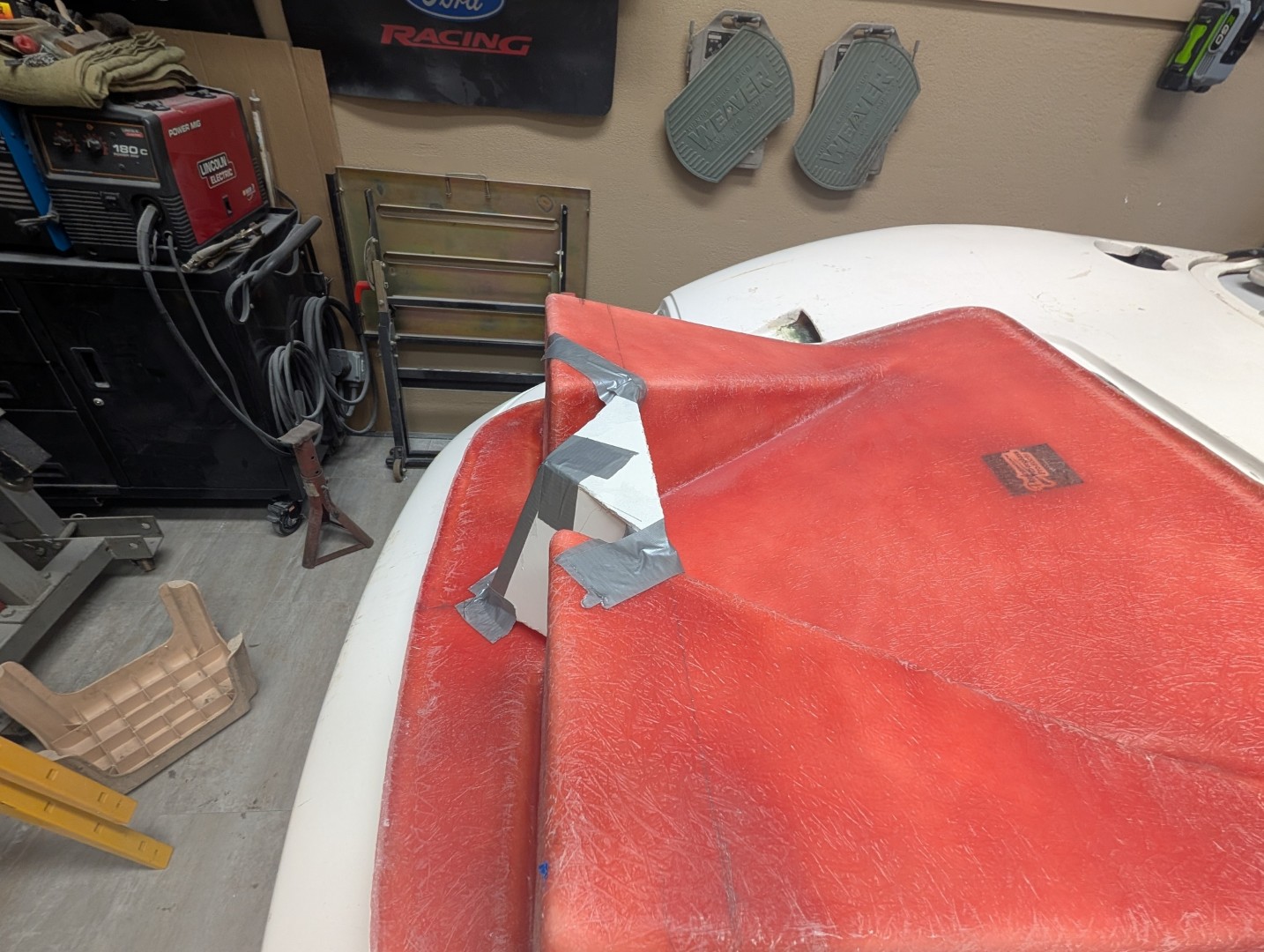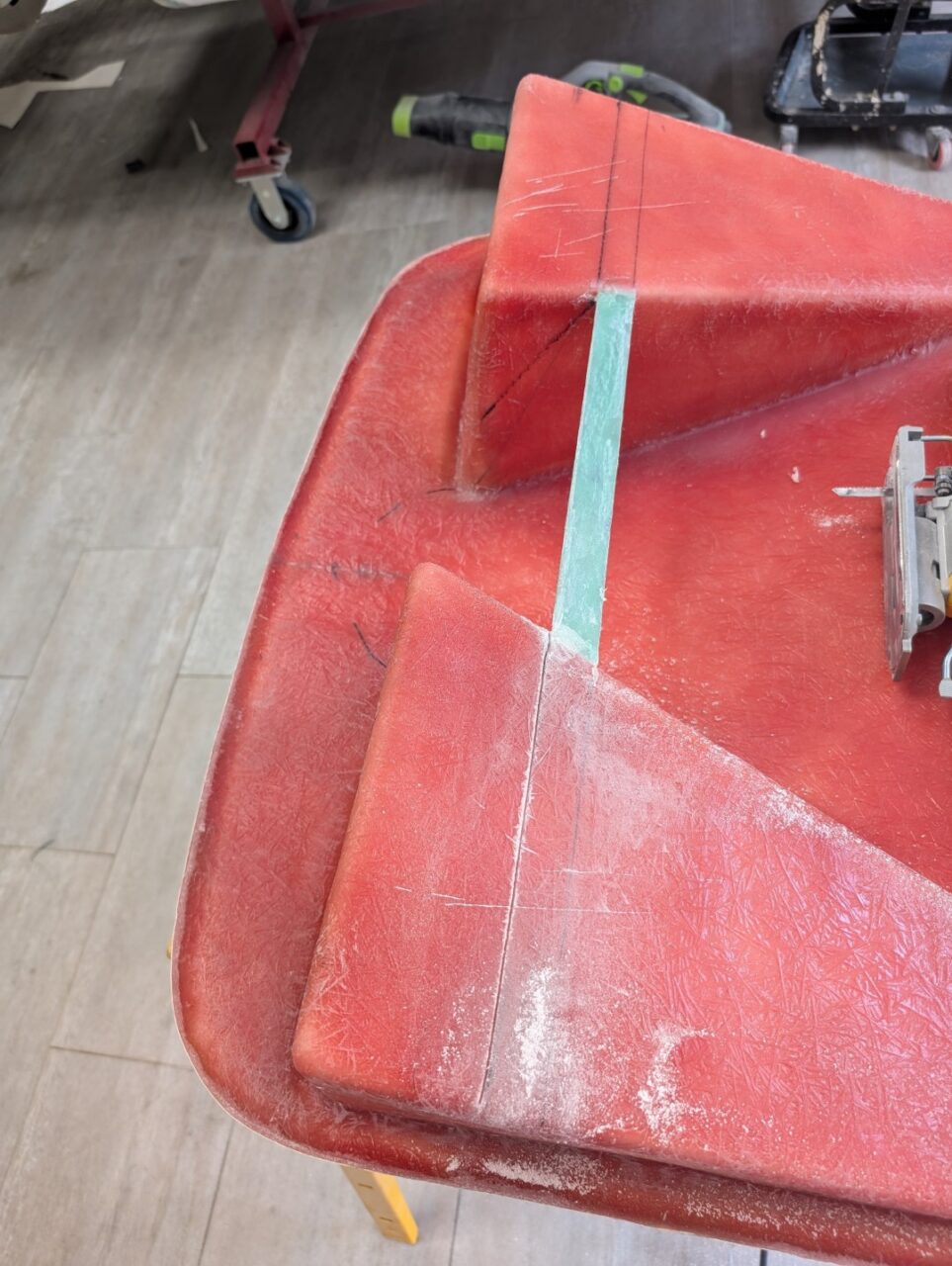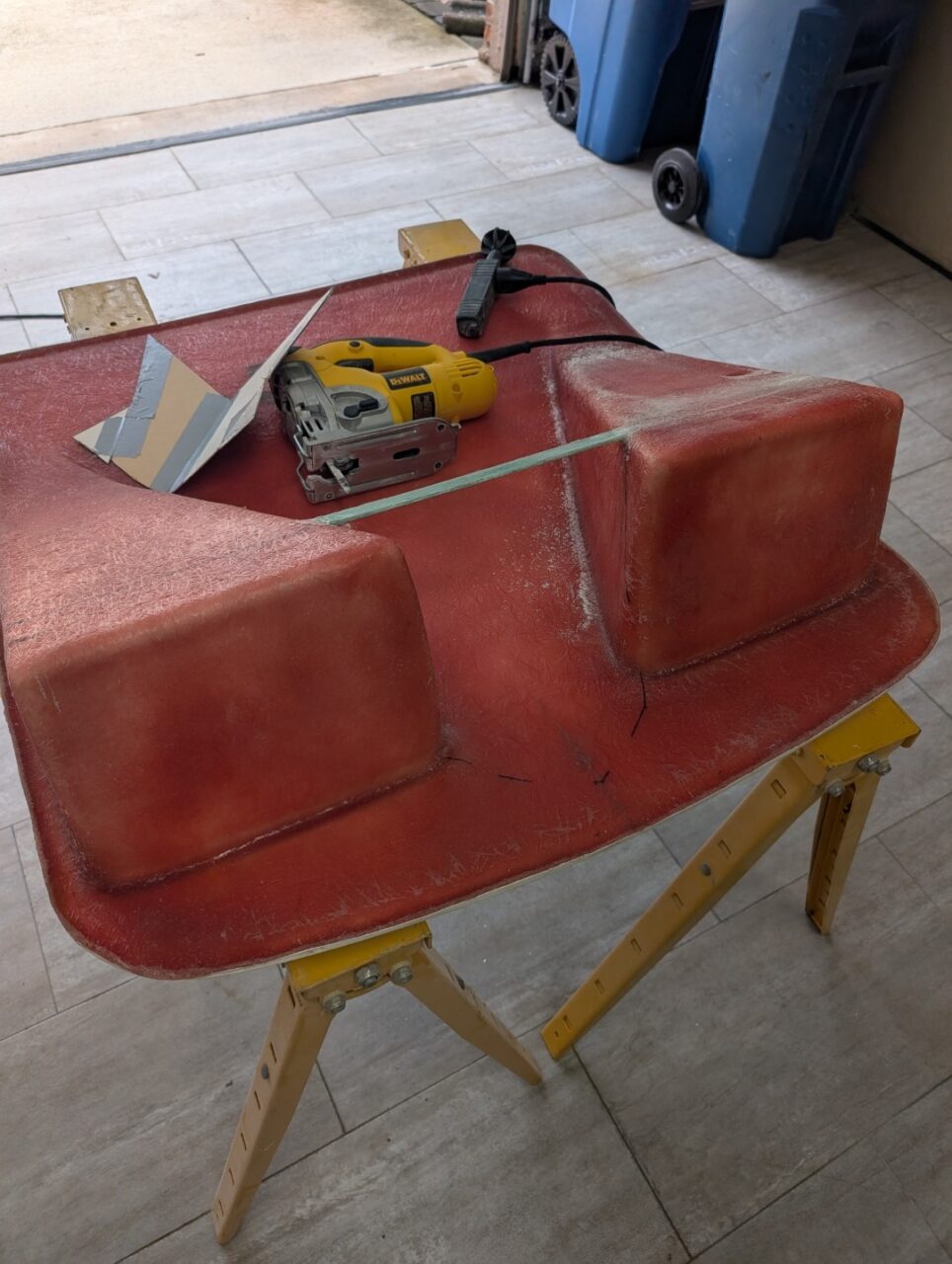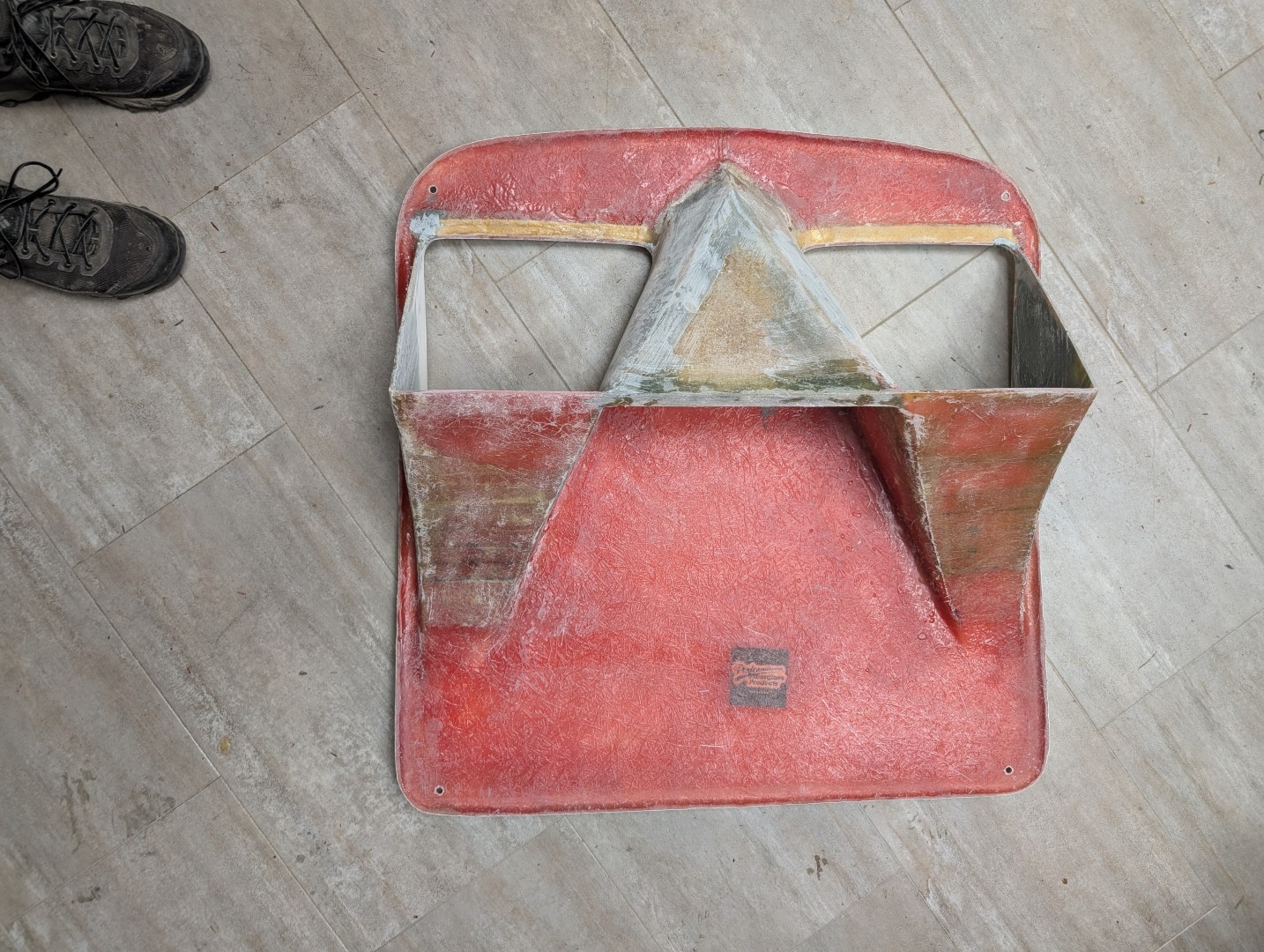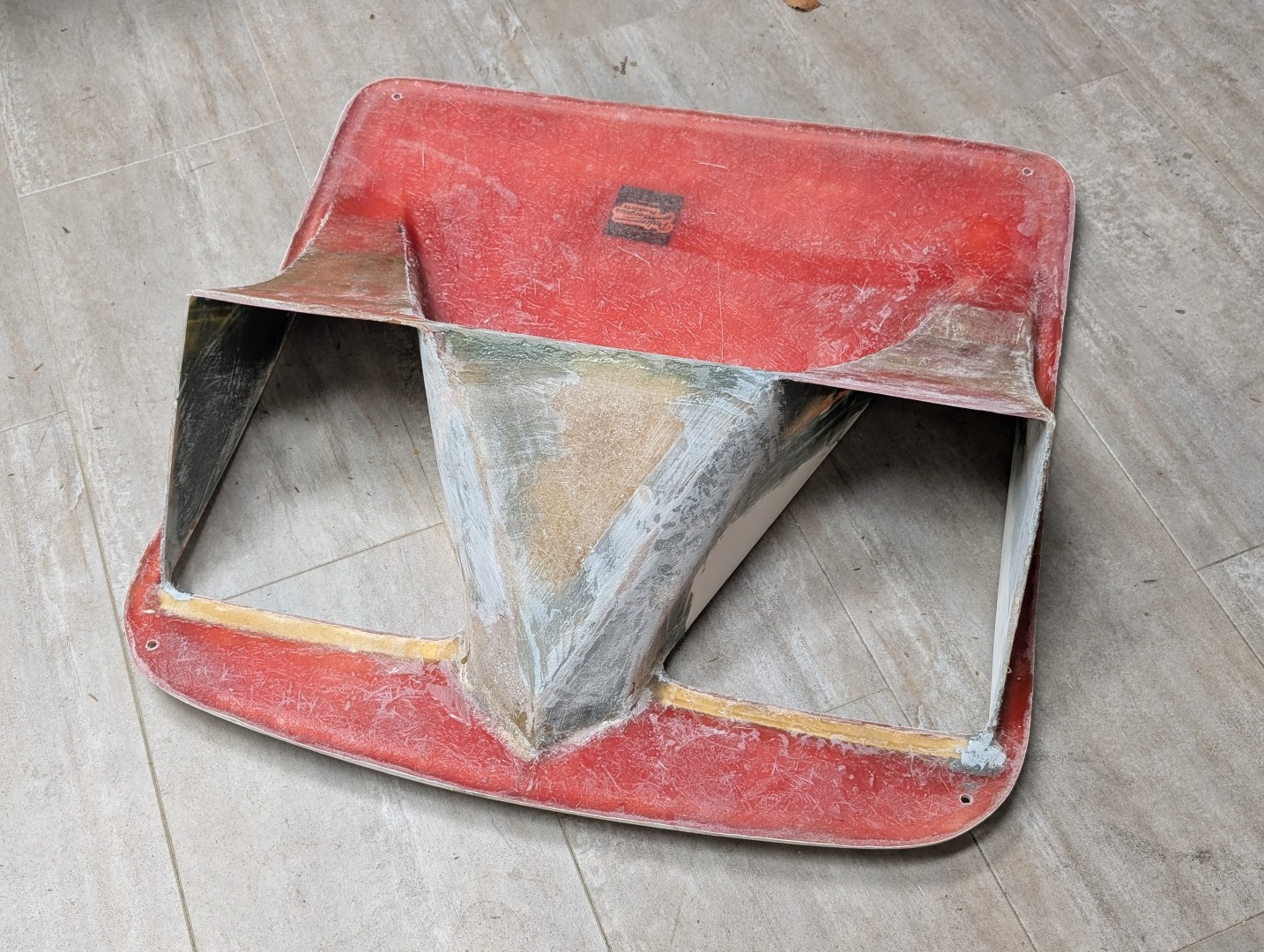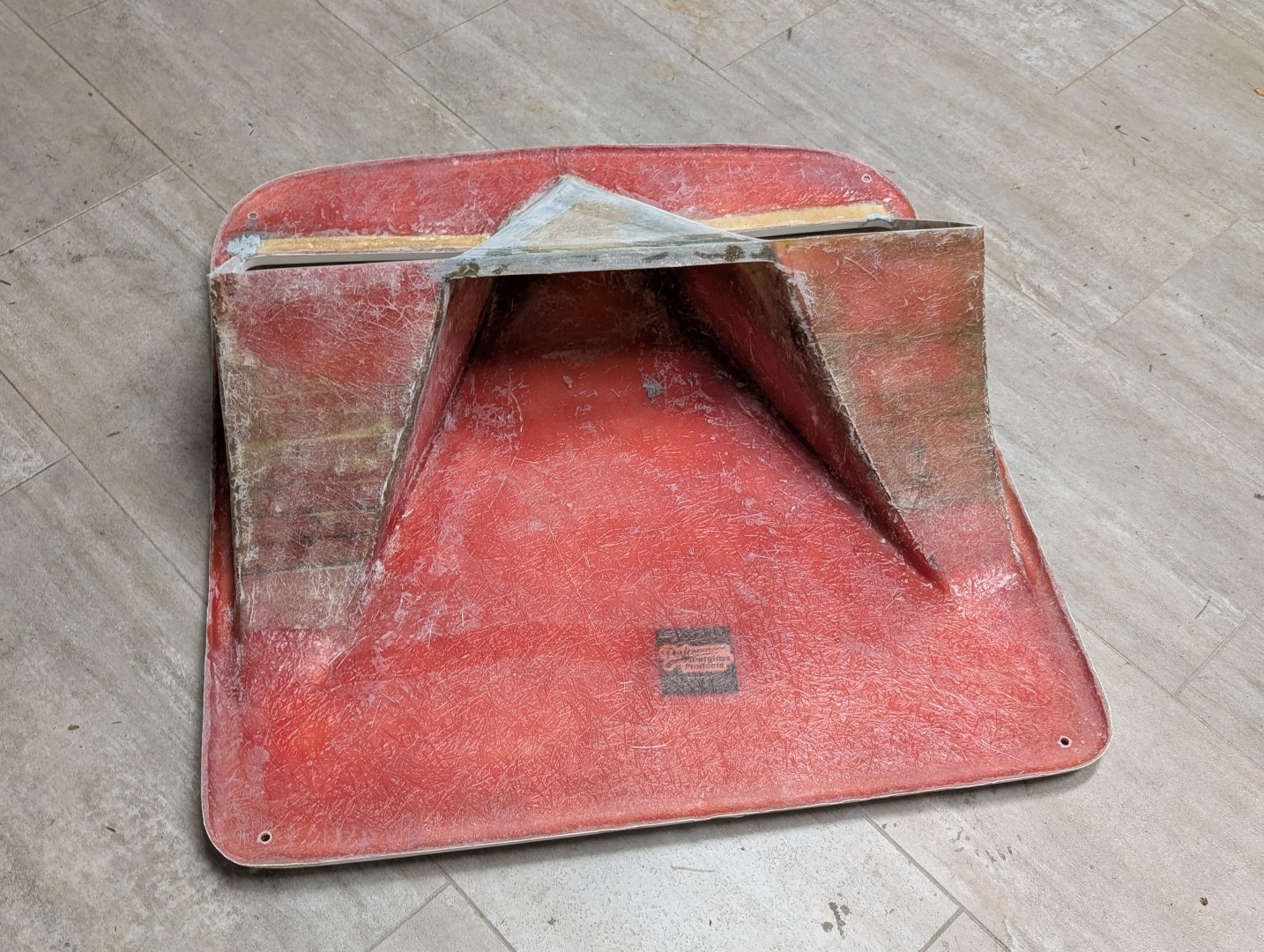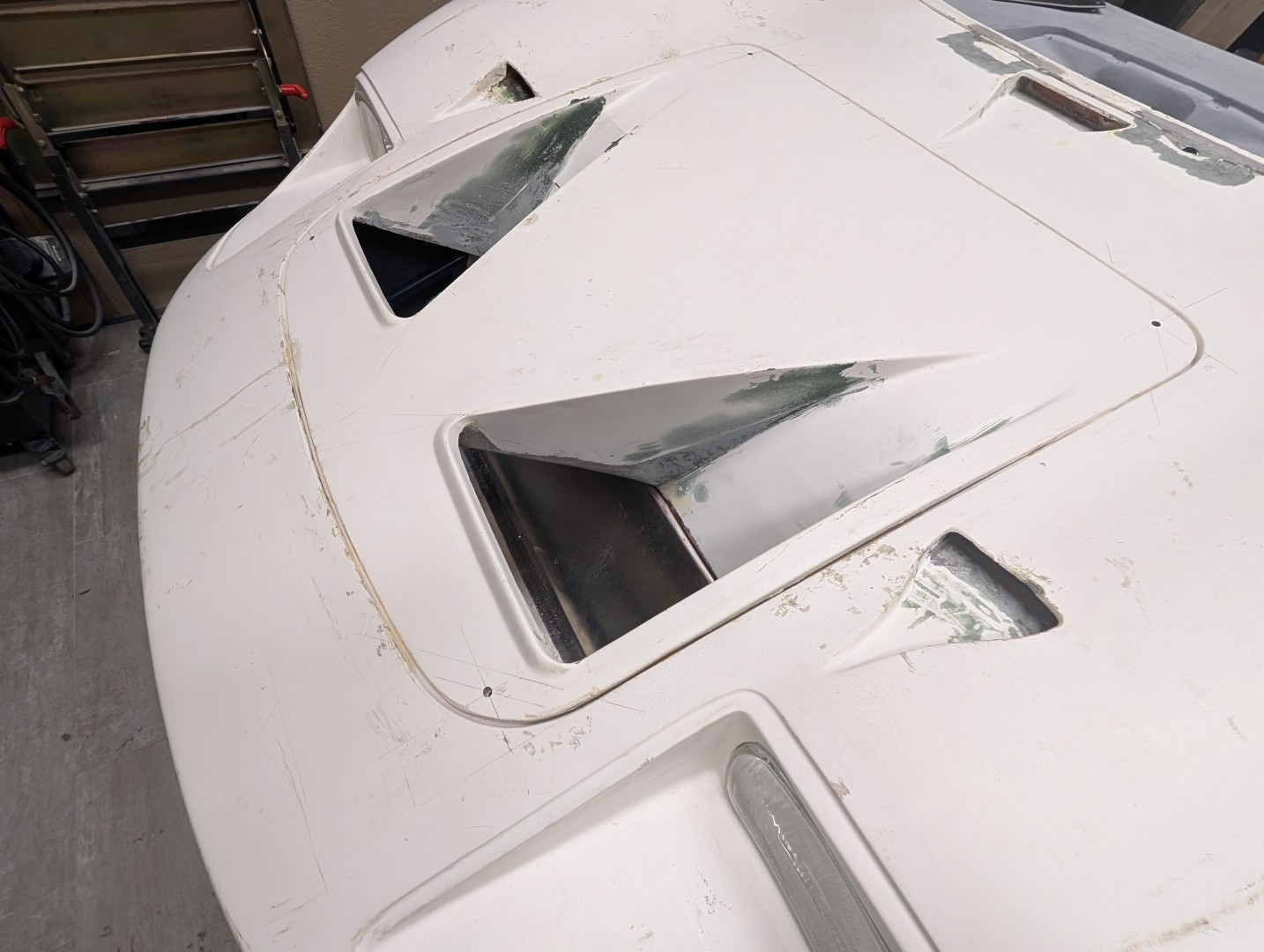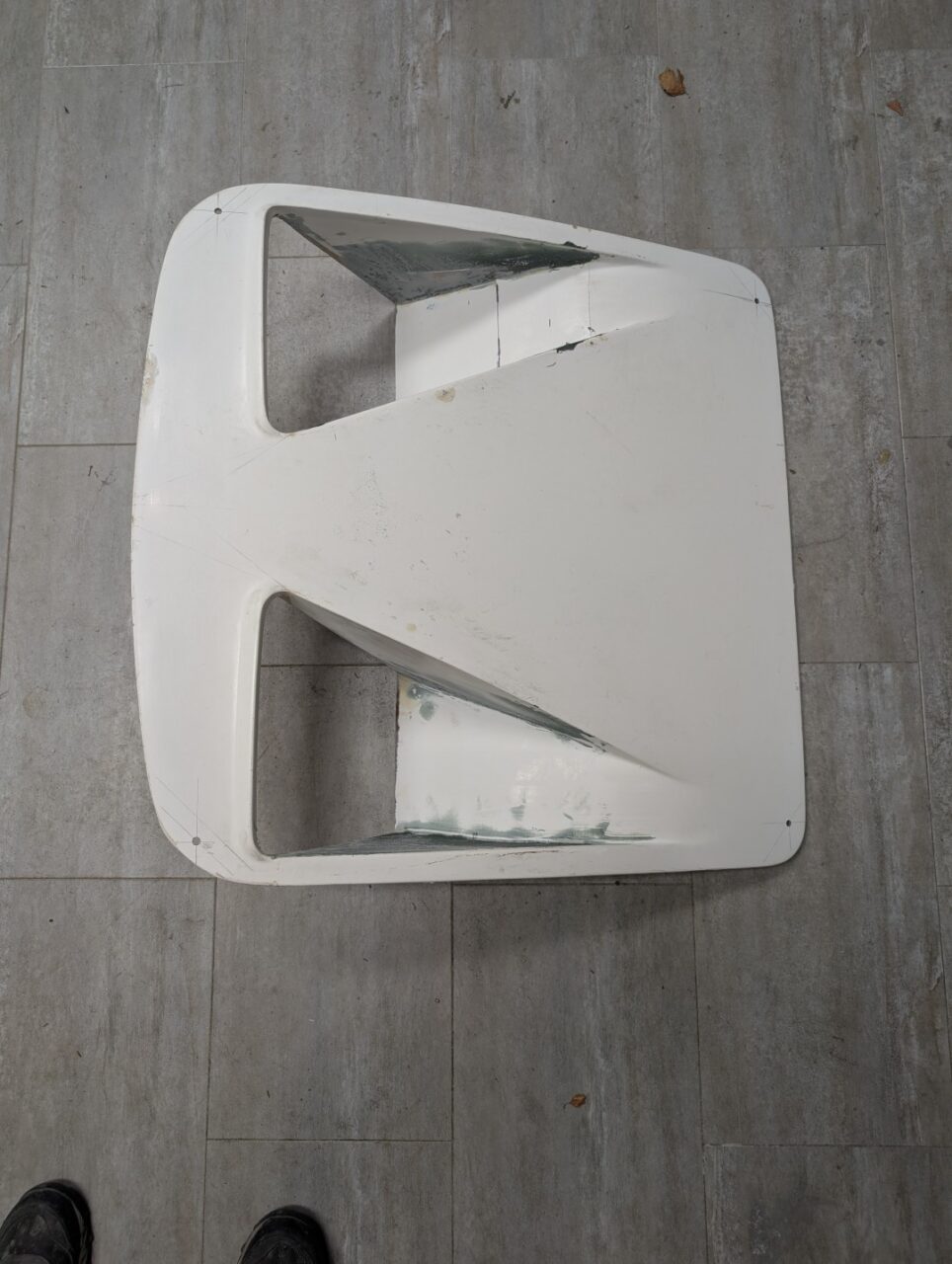
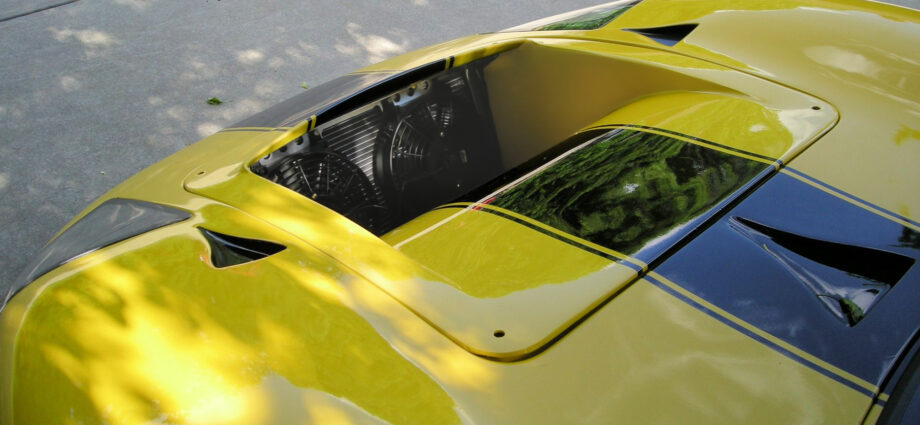
The GT40’s nostril has taken many shapes over the years, evolving in response to both aerodynamics and cooling needs. From the beginning, cooling was an issue with these cars. It seems almost every car had a different configuration as everyone experimented with ways to improve airflow. Add in the aerodynamic challenges of the earlier prototypes, and the design became a moving target.
Many prefer the MkI’s dual-nostril configuration because it looks so attractive. But spend enough time on the track and you begin to understand why the more open, single-outlet design can be more desirable.
I opted for the dual nostril, and the molding delivered with my build had a very shallow opening. A little research on the GT40 forums and other sources revealed this was typical of earlier versions. The openings exposed only about 50% of the radiator, there were no fans, and the inside of the entire front clip—including the footbox area—was exposed to the hot air coming off the radiator. Not exactly conducive to a comfortable ride around town.
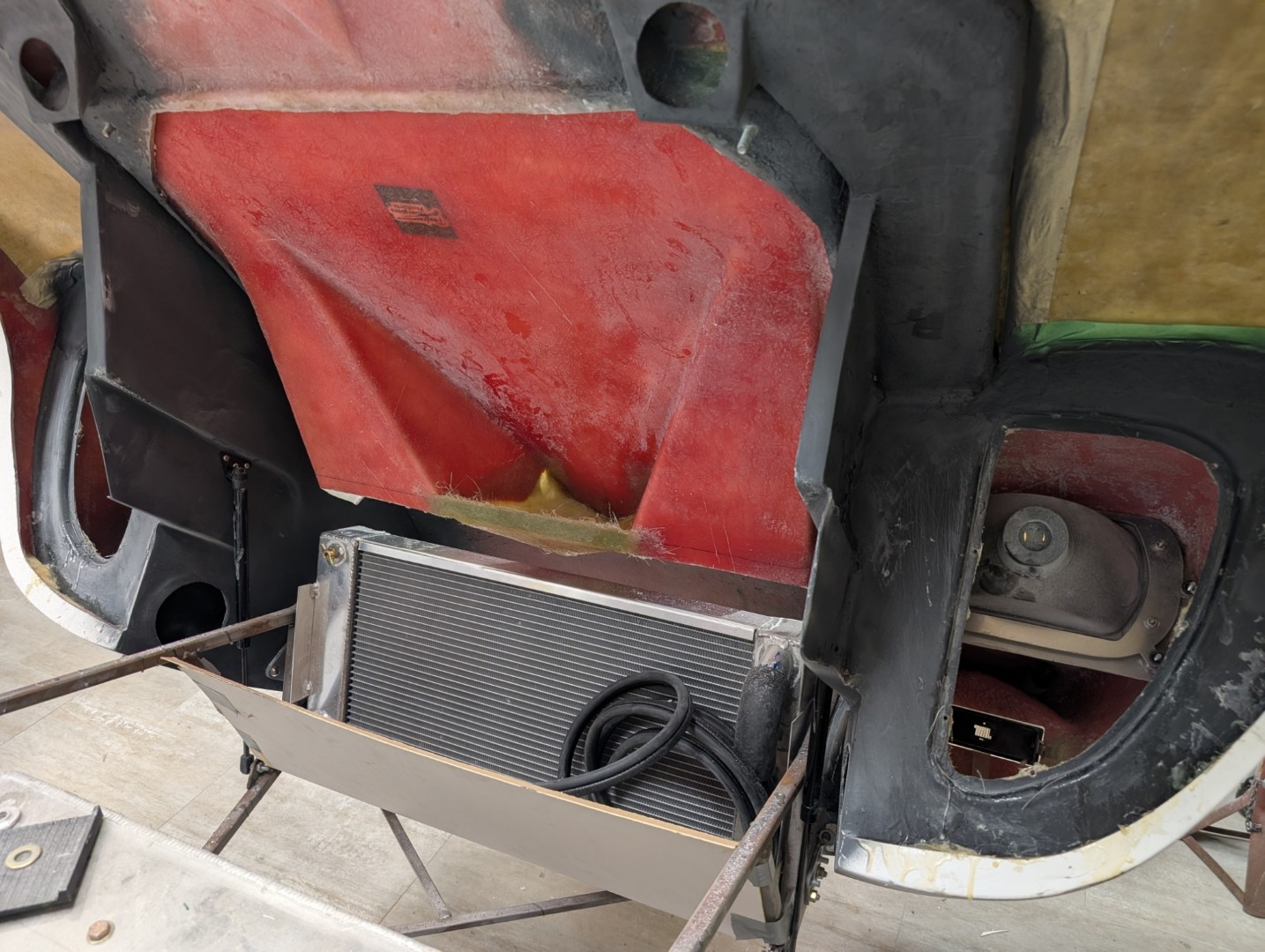
I also learned that some earlier cars incorporated a deflector panel as part of the front frame and radiator system. Its purpose was to direct hot air out through the nostrils and into the slipstream, rather than letting it spill into the front clip and cockpit wall. Owners reported improved cooling along with a definite reduction in cockpit heat.
Seemed like a no-brainer to me.
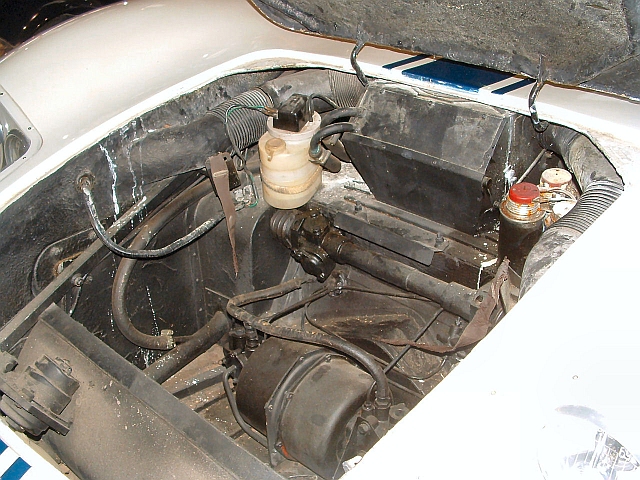
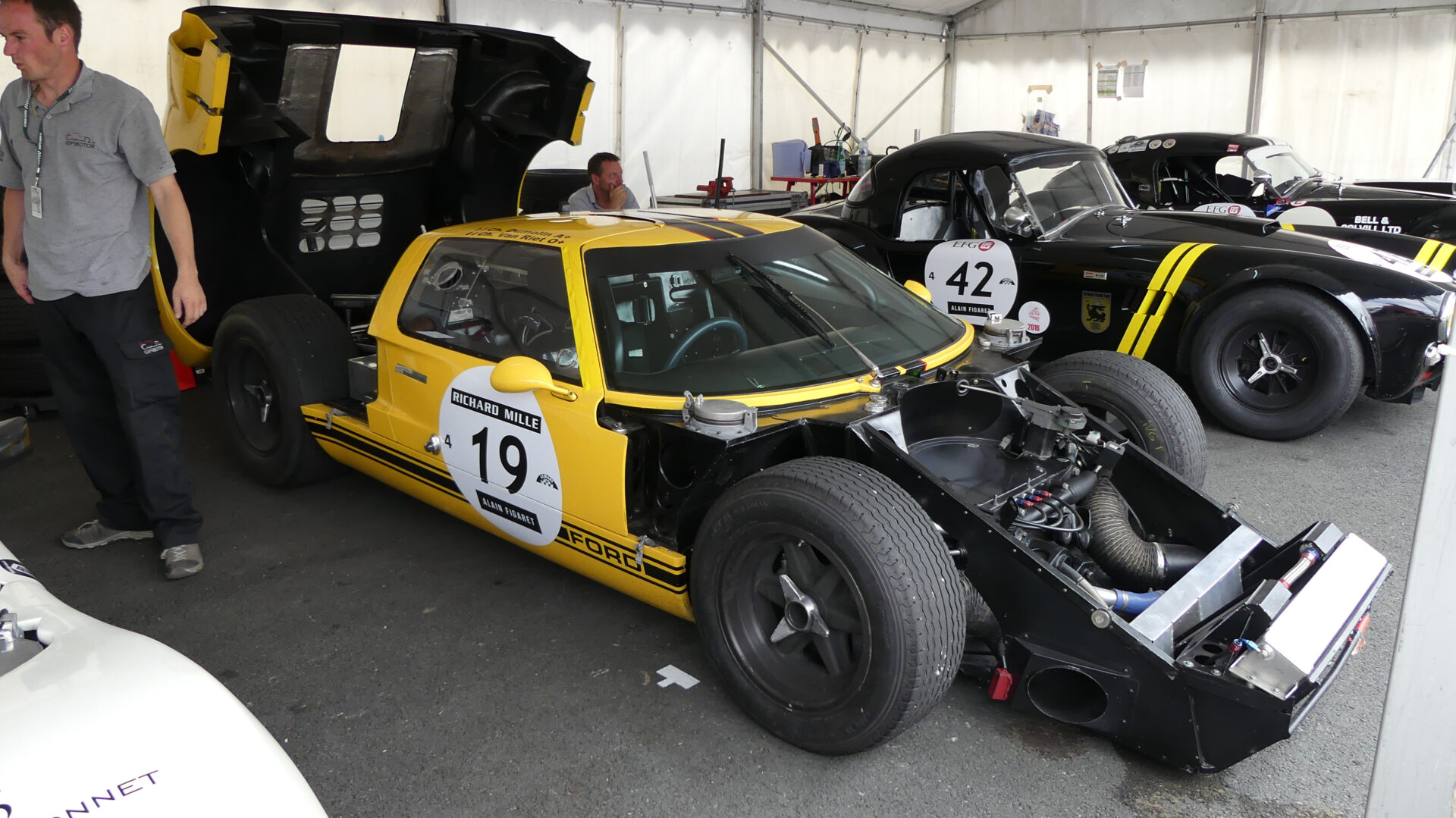
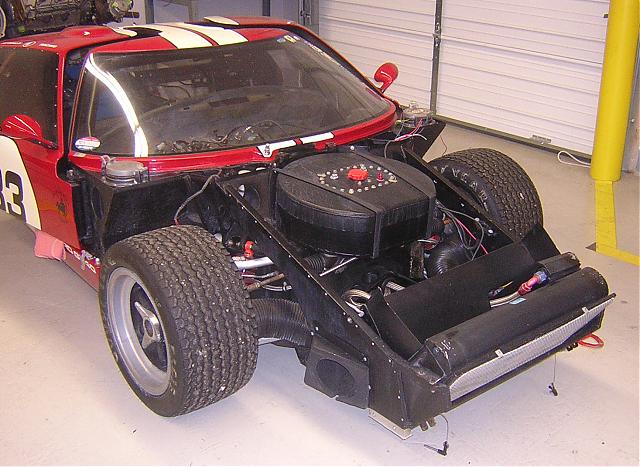
Researching the original cars is not easily done when you are looking for details under the front clip. The manor in which it is mounted and removed is not very conducive to a quick photograph. These are a few of the shots I have found showing the deflector
My system added a formed deflector sheet behind the radiator which mated to the bottom of the nostril ducts. A bulb seal closed the joint and helped move the hot air in the correct direction. This is a short video showing the front frame and components and the lower deflector.
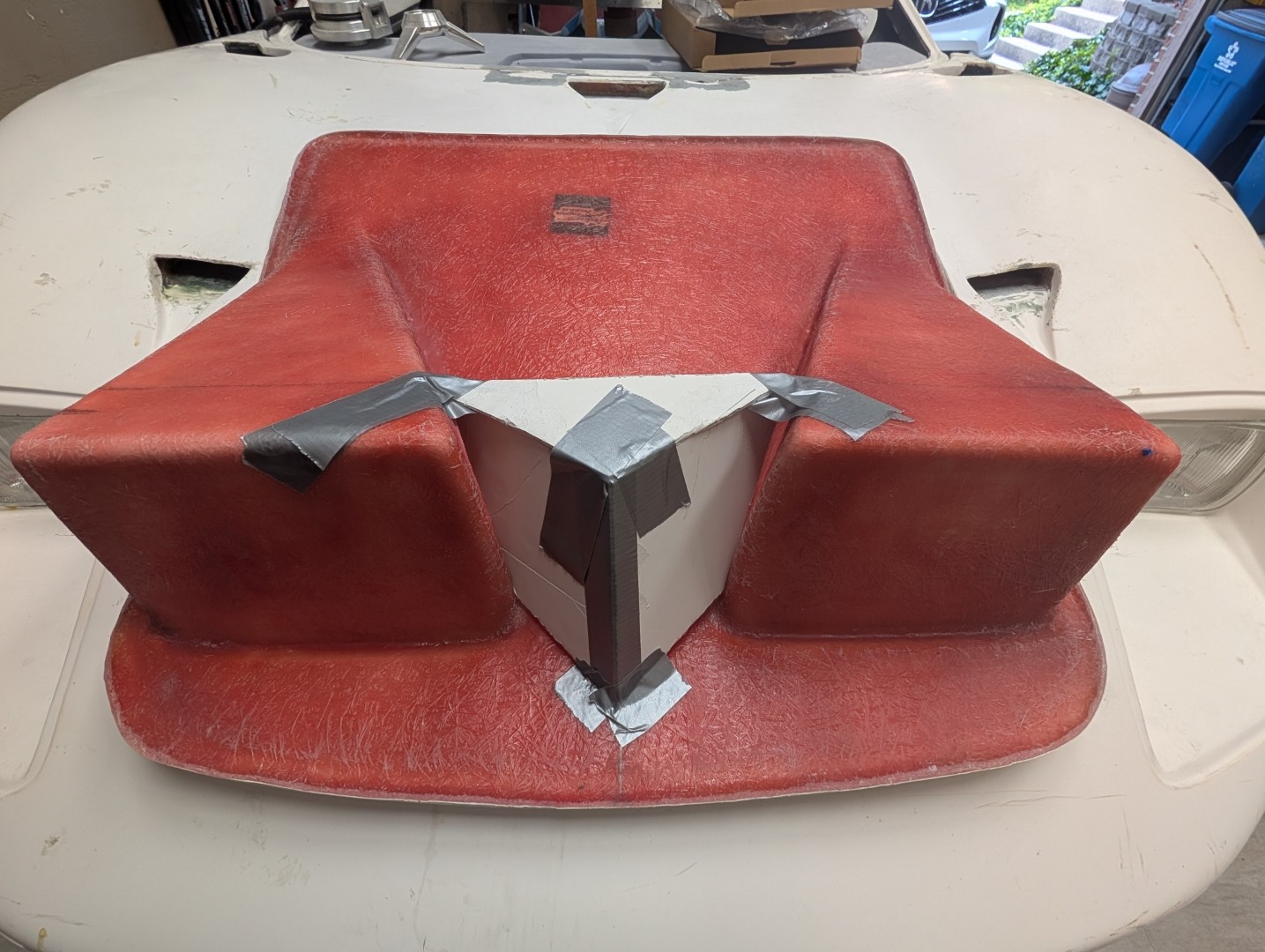
Mated to that was the nostril section. It’s opening was increased slightly (3″) over that of the original molded size. I felt the additional vent area would help with cooling and air flow and not detract from the appearance of the two openings.
This gallery is a number of shots of the nostril during its modification and finishing.
I began with the unmodified nostril in place to mark the angles and clearances needed to allow the front clip to rotate without removing the nostril. The position and angle of the center divider is critical to clear the radiator and support frame.
The opening was spanned with a piece of fiberglass sheet to help form a straight-flat line to mate with the aluminum deflector. It was then molded in using multiple layers of 1-1/2 ounce cloth and resin.
The edges of the opening were pretty rough as received so I masked and molded the edges to give them a consistent thickness and a straight edge
Have I told you recently, how much fiberglass work is required on a GT40 build?